Solitaire vs Halo Engagement Rings: Which Style Should You Choose?
Quick Summary
- A solitaire engagement ring keeps the focus on one centre stone; a halo surrounds it with smaller diamonds.
- Halo settings usually create more visible diamond area and can make the centre stone appear larger.
- Solitaire settings are generally easier to clean and can feel more understated.
- Either style can work with a wedding ring, but setting height and basket design determine whether the bands sit flush.
- If you are unsure, compare both styles on the hand before choosing the final setting.
The Short Answer
Choose a solitaire engagement ring if you want a clean design that puts almost all the attention on the centre diamond. Choose a halo engagement ring if you want more visible diamond detail, a brighter frame and a larger-looking face-up design.
Neither setting is automatically better. Solitaire often suits someone who wears simple, structured jewellery. Halo tends to suit someone who enjoys more detail and wants the engagement ring to have stronger visual presence.
Start by comparing Avita's lab diamond solitaire engagement rings with the lab diamond halo engagement rings. The difference is much easier to judge when you can see the proportions rather than relying on style names alone.
What Is a Solitaire Engagement Ring?
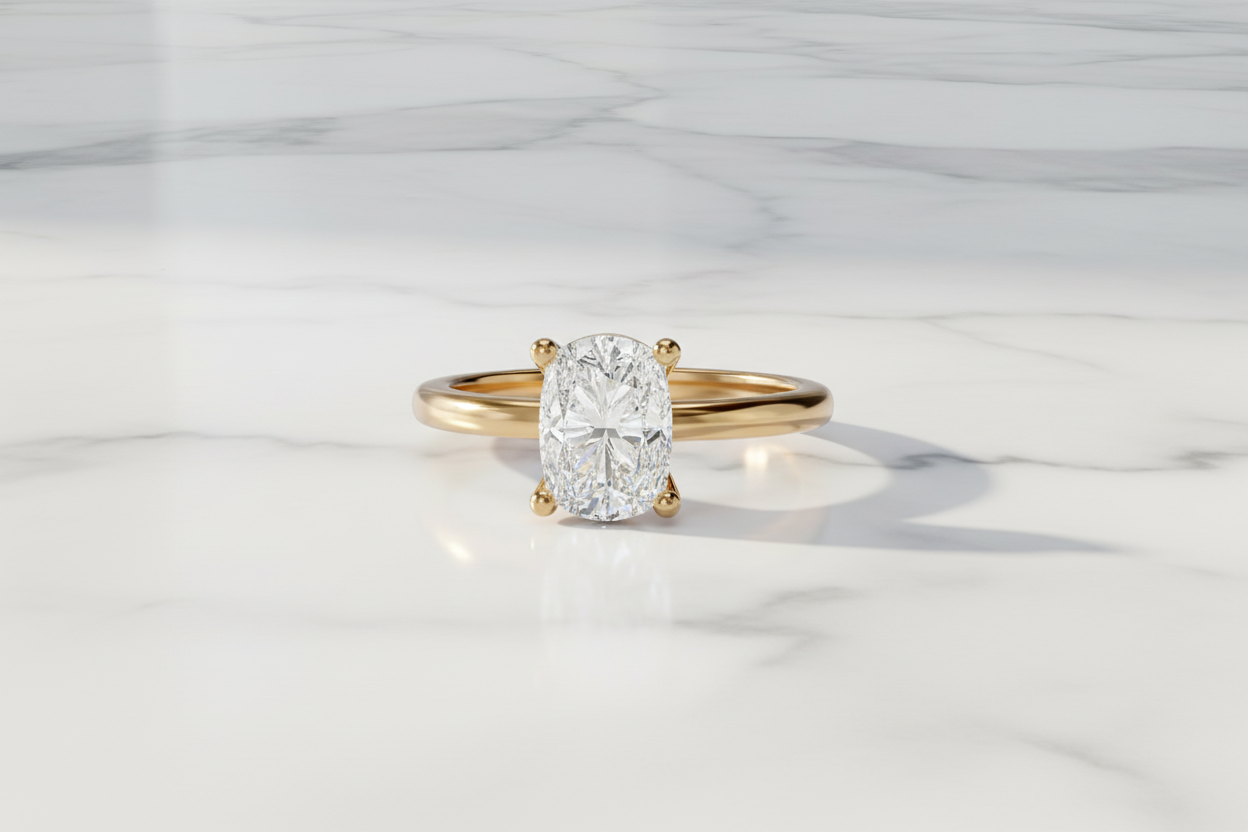
A solitaire engagement ring presents one centre stone as the main feature. The band may be plain or lightly detailed, but there is no halo of smaller diamonds surrounding the centre.
This setting is popular because it is clear and versatile. It works with round, oval, emerald cut, pear, cushion and many other diamond shapes. The simpler outline also makes small differences in the centre stone's shape and proportions easy to see.
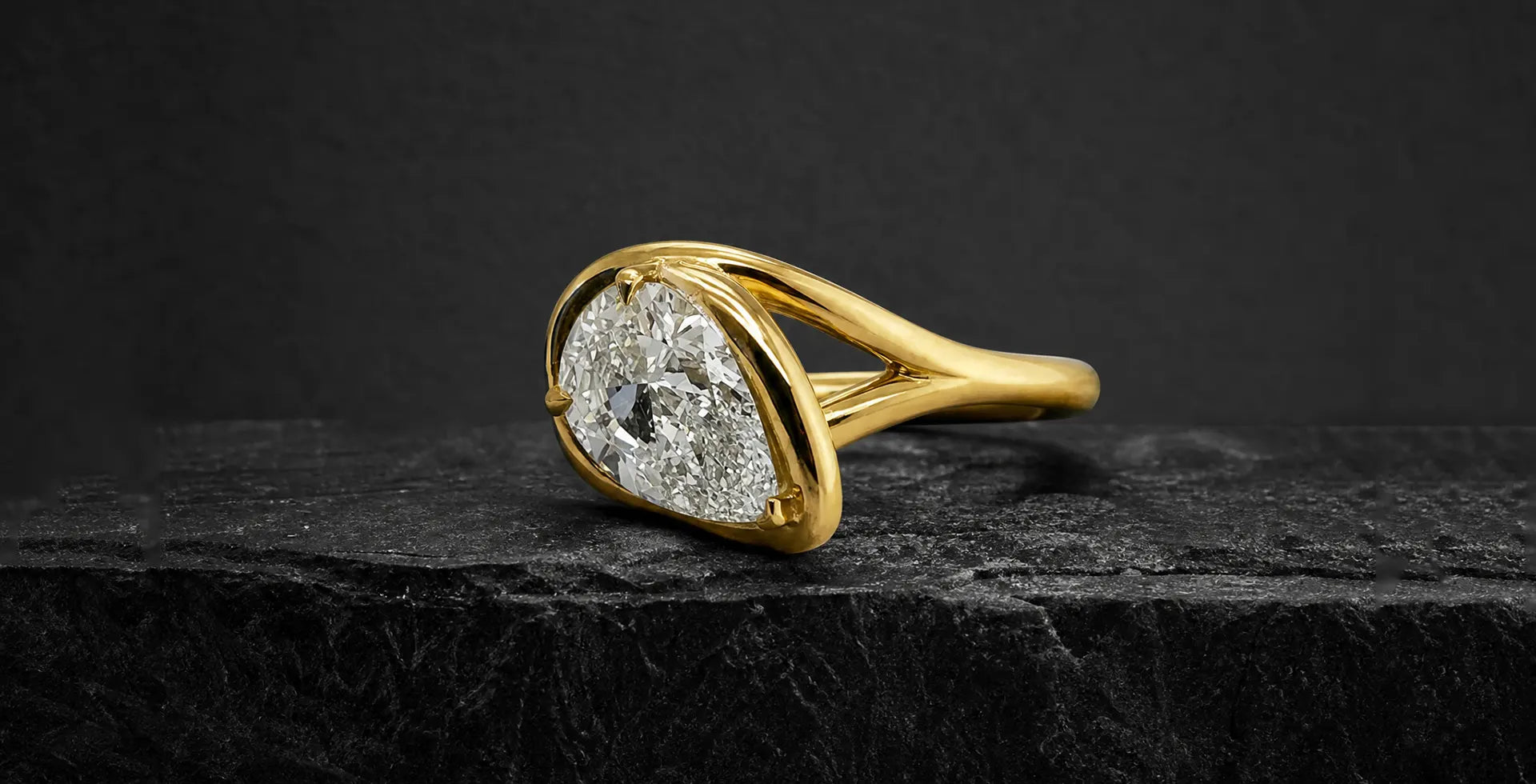
Solitaire does not have to mean plain. The ring can use a yellow gold band, a sculpted basket, unusual claws or a bespoke profile while still keeping the centre diamond visually dominant.
What Is a Halo Engagement Ring?
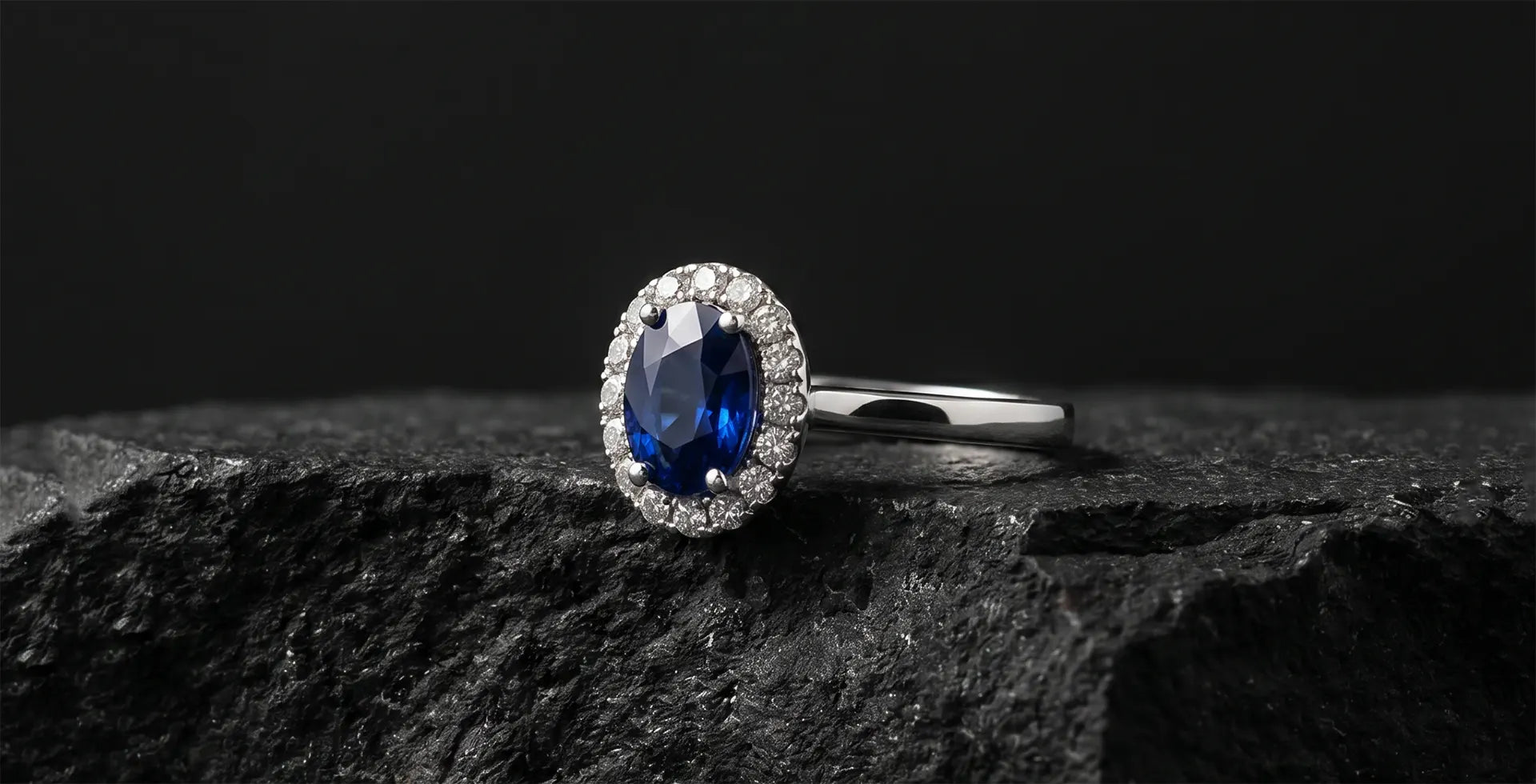
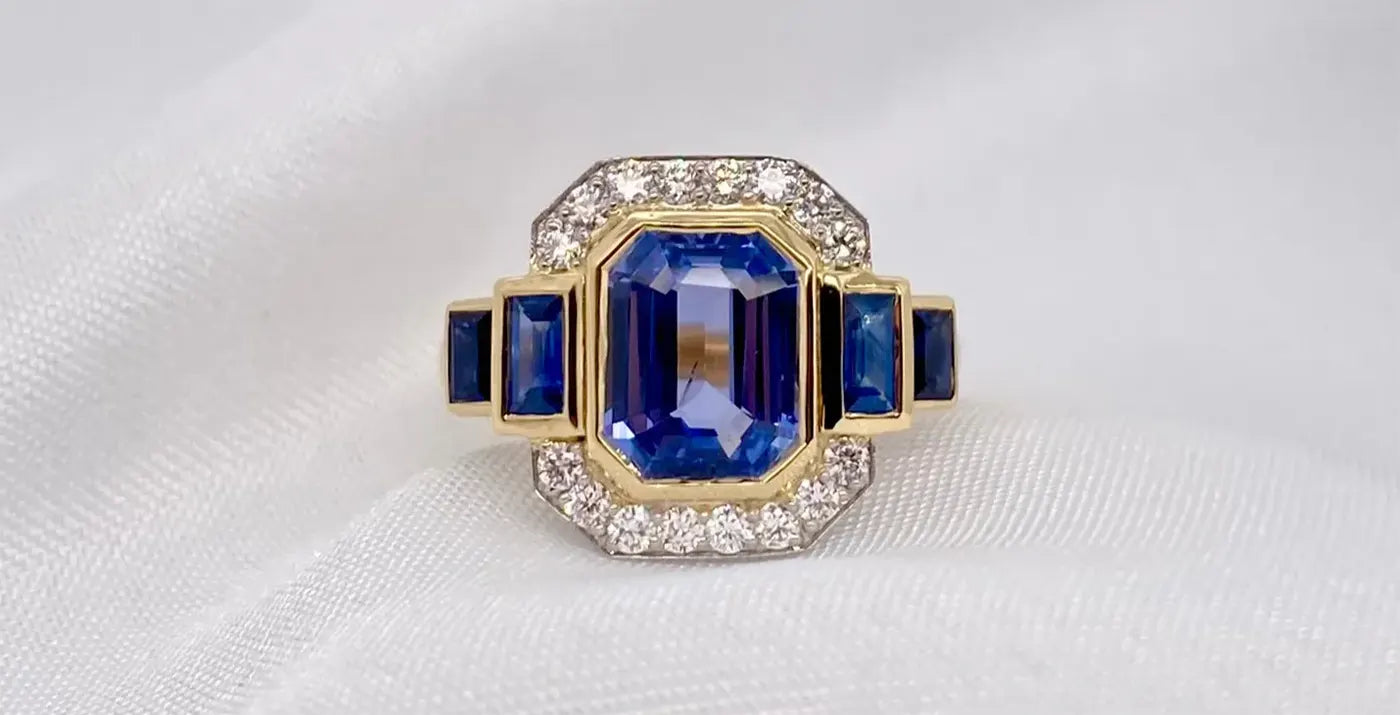
A halo engagement ring has smaller diamonds set around the centre stone. The halo creates a brighter frame and increases the visible diamond area from above.
Traditional halos are clearly visible around the centre diamond. Hidden halos sit beneath or around the side of the setting, so they add detail without changing the top view as much.
For a fuller explanation of classic, hidden and shape-specific halo designs, read Avita's guide to halo engagement ring styles, pros and cons.
Solitaire vs Halo Engagement Rings: Side-by-Side
| Feature | Solitaire Engagement Ring | Halo Engagement Ring |
|---|---|---|
| Overall look | Clean, centred and understated | Detailed, framed and more decorative |
| Centre-stone focus | Very strong | Shared with the surrounding diamonds |
| Visual size | Shows the centre stone's true outline clearly | Often looks larger from above because of the extra diamond area |
| Brightness | Depends mainly on the centre stone | Adds brightness around the centre stone |
| Cleaning and care | Usually simpler to clean | More small stones and spaces to maintain |
| Wedding ring fit | Often straightforward, depending on basket height | May need a raised setting or shaped band for a flush fit |
| Budget priority | Places more emphasis on the centre stone | Divides more of the design budget between centre stone and setting |
| Best suited to | Someone who likes minimal, centre-led jewellery | Someone who likes visible detail and stronger presence |
Use the table as a starting point. A delicate halo can look quieter than expected, while an unusual solitaire can make a strong statement. The individual design matters as much as the category.
Which Style Makes the Centre Diamond Look Bigger?
A halo usually makes the centre diamond appear larger because the surrounding diamonds extend the visible area of the ring. From a normal viewing distance, the eye may read the centre stone and halo together.
That is a visual effect. The centre diamond's carat weight does not change, and a halo cannot correct a poorly chosen stone or unbalanced proportions.
A solitaire gives a more honest view of the centre diamond's outline. This can be an advantage if you have chosen a particularly elegant oval, emerald cut or other distinctive shape and want it to remain clearly defined.
If apparent size is a priority, compare a halo and solitaire using centre stones of similar shape and carat weight. This shows how much of the difference comes from the setting rather than the diamond itself.
Which Is Easier to Wear and Maintain?
Solitaire settings are usually easier to clean because there are fewer small diamonds and fewer tight spaces where residue can collect. They can still need professional cleaning and setting checks, especially if the centre stone is held by fine claws.
Halo rings contain more small stones and setting points. They are suitable for everyday wear when well made, but keeping them bright may require more regular cleaning. Periodic checks are sensible to make sure the smaller diamonds remain secure.
Setting height matters for both. A high solitaire may catch more easily than a low halo, so it is not enough to judge practicality by the style name. Consider the wearer's work, hobbies and how often they use their hands.
Which Works Better With a Wedding Ring?
Either style can sit well with a wedding ring. The deciding factor is usually the engagement ring's side profile.
A raised basket may leave enough space for a straight wedding ring to sit flush. A lower basket or wide halo can create a gap. Some buyers like that separation; others prefer a shaped or bespoke wedding ring that follows the engagement ring's outline.
Think about this before finalising the engagement ring, not shortly before the wedding. If a flush fit matters, compare the two rings together and check the setting from the side.
Does One Style Offer Better Value?
There is no universal answer. A solitaire setting is usually less complex, but the finished ring price depends heavily on the centre diamond, metal and design.
A halo may create more visual presence around a modest centre stone. Some buyers prefer this balance instead of directing more of the budget towards centre-stone carat weight. Other buyers would rather put the budget into the best centre diamond they can comfortably choose and keep the setting simple.
The useful question is not which style is cheaper. It is where you want the budget to make the greatest visual difference: the centre stone, the surrounding detail or a balance of both.
Which Style Suits Your Partner?
Look at the jewellery they already wear.
A solitaire may be the stronger choice if they favour simple pieces, clean lines and one clear focal point. It also gives flexibility if they often mix jewellery styles or want the engagement ring to work with different wedding bands later.
A halo may suit someone who wears more detailed jewellery, enjoys visible diamond coverage or wants the ring to feel decorative from above.
If you are buying as a surprise, do not rely only on current trends. Saved images, comments about other people's rings and the shapes already in their jewellery collection are better clues. If the evidence is mixed, comparing both settings during an appointment can prevent an expensive guess.
Is a Hidden Halo the Middle Ground?
A hidden halo can be a useful middle ground. The centre diamond remains the main feature from above, while smaller diamonds add detail around the side of the setting.
It does not create the same face-up size effect as a traditional halo, but it can make a solitaire-style ring feel more considered. Read Avita's guide to hidden halo engagement rings if this sounds closer to the right balance.
Final Recommendation
Choose solitaire if you want the centre diamond to lead the design, prefer easier care and like a cleaner outline.
Choose halo if you want more visible brightness, a larger-looking face-up design and extra detail around the centre stone.
Choose a hidden halo if you want a clean top view with more interest from the side.
Browse Avita's wider engagement ring collection to compare the styles. For a particular centre stone, setting profile or wedding-ring fit, a bespoke engagement ring consultation can help refine the design.
If the choice still feels close, book a viewing appointment at Avita's London, Hatton Garden studio and compare solitaire and halo proportions on the hand.
FAQs
Is a solitaire or halo engagement ring better?
Neither is universally better. Solitaire is usually better for a clean, centre-stone-led design. Halo is usually better for more visible diamond detail and a larger-looking face-up appearance.
Does a halo make the centre diamond look bigger?
Yes, visually. The smaller surrounding diamonds increase the visible diamond area, although the centre stone's actual carat weight and dimensions do not change.
Are halo rings harder to maintain than solitaires?
Halo rings usually need more cleaning and periodic checks because they contain more small diamonds and setting points. A solitaire is often simpler to maintain, although both styles need appropriate care.
Can a wedding ring sit flush with a halo engagement ring?
It can if the halo setting and basket leave enough space. Lower or wider settings may require a shaped wedding ring. Check the side profile before finalising the engagement ring.
Is a hidden halo a good alternative to a traditional halo?
Yes, if you want extra diamond detail without a visible frame around the centre stone from above. A hidden halo keeps the top view closer to a solitaire and shows more detail from the side.