Oval vs Round Engagement Rings: Which Shape Should You Choose?
Round engagement rings are classic, symmetrical and known for strong brilliance. Oval engagement rings give a longer, softer outline and can appear larger on the hand. This guide compares both shapes so you can choose with more confidence.
The Short Answer
Choose a round engagement ring if you want classic symmetry, strong brilliance and a shape that suits almost every setting. Choose an oval engagement ring if you want a longer, more elegant outline that can make the centre diamond look larger on the hand.
Neither shape is automatically better. They simply do different jobs.
If you are already comparing designs, start by viewing Avita's oval engagement rings alongside the round diamond engagement rings. Seeing the two shapes side by side is often more useful than trying to make the decision from specifications alone.
The honest answer is this: round is usually the safer, more traditional choice; oval is often the stronger choice if visual presence and hand shape matter more.
Oval and Round Engagement Rings: The Main Difference
Round and oval diamonds are both brilliant-style shapes, but they look very different once set in a ring.
A round diamond has a circular outline and is usually cut to maximise light return. It gives a balanced, symmetrical look and is the shape most people picture when they think of a traditional diamond engagement ring.
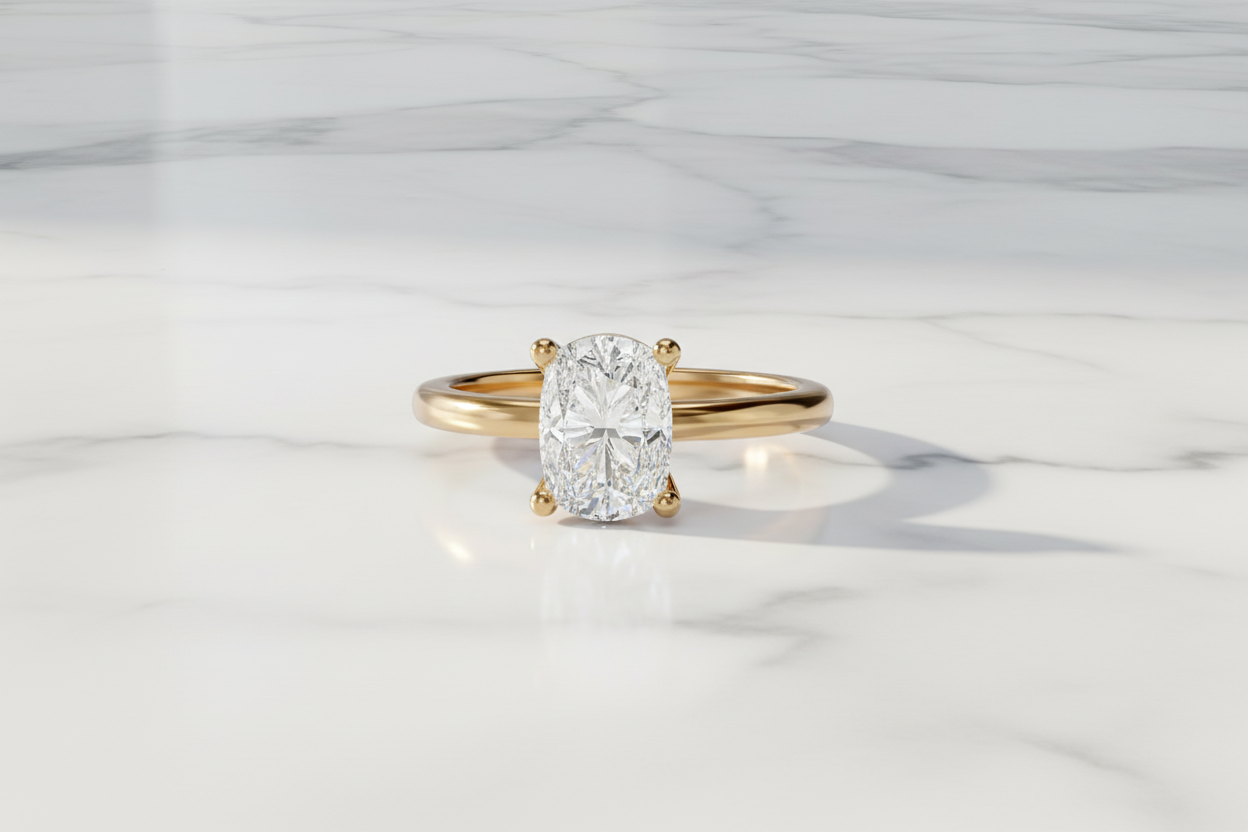
An oval diamond has an elongated outline. It still gives plenty of brightness, but the shape spreads across more of the finger. That length can make the ring look more graceful and, in many cases, make the diamond appear larger than a round diamond of similar carat weight.
That visual difference matters. Engagement rings are worn every day, so the shape needs to suit the hand, the setting and the wearer's style, not just the search trend.
What Makes Round Engagement Rings Popular?
Round engagement rings have stayed popular because they are easy to understand and difficult to get wrong.
The round brilliant cut is known for strong sparkle. Its proportions are well established, and it works in almost every setting style: solitaire, halo, diamond shoulder, trilogy and more detailed bespoke designs. If the wearer likes classic jewellery, a round diamond will rarely feel out of place.
Round also gives a clean, centred look on the hand. It does not lean strongly modern or vintage. That makes it a good option if you want the ring to feel balanced rather than fashion-led.
The trade-off is that round diamonds are highly in demand. Depending on the specification, a round diamond may not always give the largest visual spread for the budget. That does not make it a poor choice. It just means you should know what you are prioritising: brilliance and symmetry, or apparent size and elongation.
What Makes Oval Engagement Rings Popular?
Oval engagement rings are popular because they give a softer, longer outline without feeling too unusual.
An oval diamond can make the finger appear longer and slimmer. It also tends to cover more length across the finger than a round diamond of the same carat weight, which is why many buyers feel it has a stronger presence on the hand.
Oval diamonds also work well with many settings. A simple solitaire keeps the shape clean. A halo can add more detail around the centre stone. A diamond shoulder band adds brightness along the sides without hiding the oval outline.
There is one practical point to watch: oval diamonds can sometimes show a darker "bow-tie" area across the centre. This is not always a problem, and many oval diamonds look bright and balanced, but it is a reason to choose the individual stone carefully rather than relying on carat weight alone.
Oval vs Round Engagement Rings: Side-by-Side Comparison
| Feature | Oval Engagement Ring | Round Engagement Ring |
|---|---|---|
| Overall look | Elongated, elegant, slightly more distinctive | Classic, balanced, symmetrical |
| Brilliance | Can be very bright, but cut quality matters | Usually the safer choice for strong sparkle |
| Visual size | Often appears larger for its carat weight | More compact outline on the finger |
| Finger appearance | Can make the finger appear longer | Gives a centred, traditional look |
| Setting flexibility | Works well in solitaire, halo, hidden halo and bespoke designs | Works with almost every setting style |
| Budget considerations | May offer strong visual size within budget, depending on stone quality | Can cost more for comparable size/specification because of demand |
| Best suited to | Someone who wants elegance, length and visual presence | Someone who wants classic sparkle and symmetry |
Use this table as a starting point, not a rulebook. A well-chosen round diamond can look incredible. A poorly chosen oval can look flat or unbalanced. The individual stone still matters.
Which Shape Looks Bigger?
Oval diamonds often look larger than round diamonds of the same carat weight because the weight is spread across a longer shape. This gives more visible length on the finger.
That said, "looks bigger" is not the same as "is better". A diamond can look larger but still have weaker light performance, poor proportions or an obvious bow-tie. A smaller round diamond with excellent brightness may look more impressive than a larger oval that has not been chosen well.
If visual size is important, oval is worth considering. If you care more about sparkle and symmetry, round may still be the better fit.
Which Shape Sparkles More?
Round brilliant diamonds are usually the stronger choice for sparkle. Their cut style is designed around light return, which is why round diamonds are so widely used in engagement rings.
Oval diamonds can still have beautiful brightness, but they are less standardised than round diamonds. Two oval diamonds with the same carat weight and certificate grades can look noticeably different in person.
This is where expert selection helps. If you are choosing an oval, look beyond the numbers. Pay attention to the overall outline, the balance of the ends, the brightness across the stone and whether the bow-tie is distracting.
For a deeper foundation on diamond quality, Avita's learn about diamonds guide is useful before comparing individual stones.
Which Shape Works Best With Different Settings?
Both oval and round diamonds work across many engagement ring settings, but they create different effects.
A solitaire setting keeps the focus on the centre diamond. This works well for both shapes. With round, the result is classic and clean. With oval, the result feels more elongated and refined.
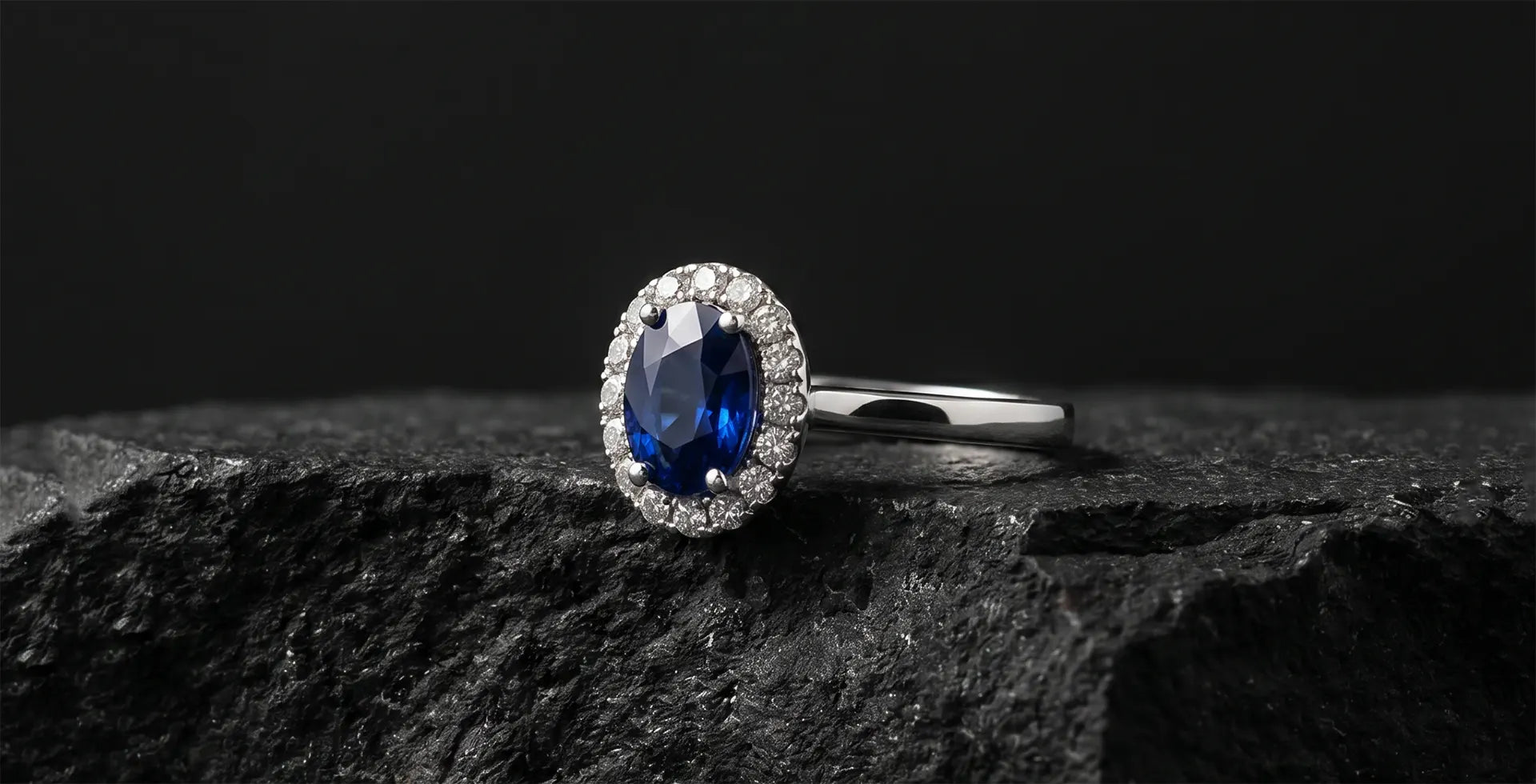
A halo setting gives more visual presence around the centre stone. It can make a round ring feel brighter and more detailed, while an oval halo ring can look especially striking because the shape is extended further. If you like this style, compare Avita's lab diamond halo engagement rings for setting inspiration.
Diamond shoulder settings add detail along the band. They work well if you want more brightness without surrounding the centre diamond fully. Trilogy settings can also work for both shapes, but the side stones need to be carefully proportioned so they do not overpower the centre.
The setting should support the shape, not fight it. A good design makes the centre stone look intentional.
Which Shape Suits Your Partner's Style?
This is the part that matters more than most buyers admit.
If your partner wears classic jewellery, prefers simple pieces and rarely chooses trend-led designs, a round diamond may feel safer. It is recognisable, balanced and easy to wear.
If your partner likes slightly more distinctive jewellery, elongated silhouettes or rings that feel elegant without being too traditional, oval may be the better direction.
Look at what they already wear. Do they choose rounded shapes or longer lines? Yellow gold or platinum tones? Minimal pieces or more detailed designs? The existing jewellery box usually tells you more than a generic trend report.
If you are planning a surprise proposal and feel unsure, a consultation can help you narrow the decision without making the ring feel less personal.
Natural, Lab Grown or Bespoke: Does the Shape Choice Change?
The shape decision applies whether you choose a natural or lab grown diamond. Both oval and round diamonds are available in either route.
If budget flexibility matters, lab grown diamond engagement rings may allow you to compare larger stones or higher specifications within the same budget. If natural origin and geological rarity matter more, a natural diamond may feel right.
Bespoke can also be useful when the shape decision is close. With a bespoke engagement ring consultation, you can compare diamond shapes, setting proportions and metal choices before the final design is made.
This is especially helpful for oval rings because small differences in proportion can change the way the ring looks on the hand.
Final Recommendation
Choose round if you want classic brilliance, symmetry and a shape that will not date easily.
Choose oval if you want an elongated look, strong visual presence and a shape that feels elegant without being too traditional.
If you are genuinely split between the two, do not force the decision from a screen. Browse Avita's engagement rings, compare the oval and round collections, then book a consultation if you want help choosing the right diamond and setting combination.
The best shape is the one that suits the wearer and still looks right after the first excitement has settled.
FAQs
Is oval or round better for an engagement ring?
Neither is universally better. Round is usually best if you want classic brilliance and symmetry. Oval is often better if you want an elongated look and a diamond that appears larger on the hand.
Do oval diamonds look bigger than round diamonds?
Oval diamonds often look larger than round diamonds of the same carat weight because of their longer surface area. The final appearance still depends on cut quality, proportions, setting and finger size.
Do round diamonds sparkle more than oval diamonds?
Round brilliant diamonds are usually the safest choice for strong sparkle because their cut is designed for light return. Oval diamonds can still be bright, but the individual stone needs to be chosen carefully.
Are oval engagement rings cheaper than round engagement rings?
They can sometimes offer more visual size for the budget, but they are not automatically cheaper. Price depends on carat weight, cut, colour, clarity, certification and the specific diamond.
Which setting works best for oval and round diamonds?
Both shapes work well in solitaire, halo and diamond shoulder settings. Round diamonds suit almost every classic setting, while oval diamonds often look especially good in solitaire, halo and elongated bespoke designs.
Can Avita help me compare oval and round engagement rings in person?
Yes. Avita Jewellery can help you compare oval and round designs, diamond options and setting styles through a studio appointment in London, Hatton Garden.