Types of Engagement Rings: The Complete Style Guide
Quick Summary
- The main engagement-ring types are usually described by their setting: solitaire, halo, trilogy and diamond shoulder are useful starting points.
- Diamond shape is a separate choice. An oval, round or emerald cut can appear in more than one style.
- The right ring suits the wearer's taste, day-to-day life and preferred wedding-ring fit.
- Comparing settings on the hand is more useful than relying on a style name alone.
The Main Types of Engagement Rings
The main types of engagement rings are solitaire, halo, trilogy (or three-stone) and diamond shoulder designs. Each puts the focus in a different place: one centre diamond, a framed centre stone, a three-stone arrangement or detail along the band.
Start with Avita's engagement ring collection, then use the style descriptions below to decide what is worth trying first. A setting is not the same as a diamond shape: you might choose an oval solitaire, an emerald-cut trilogy or a round halo.
Solitaire Engagement Rings

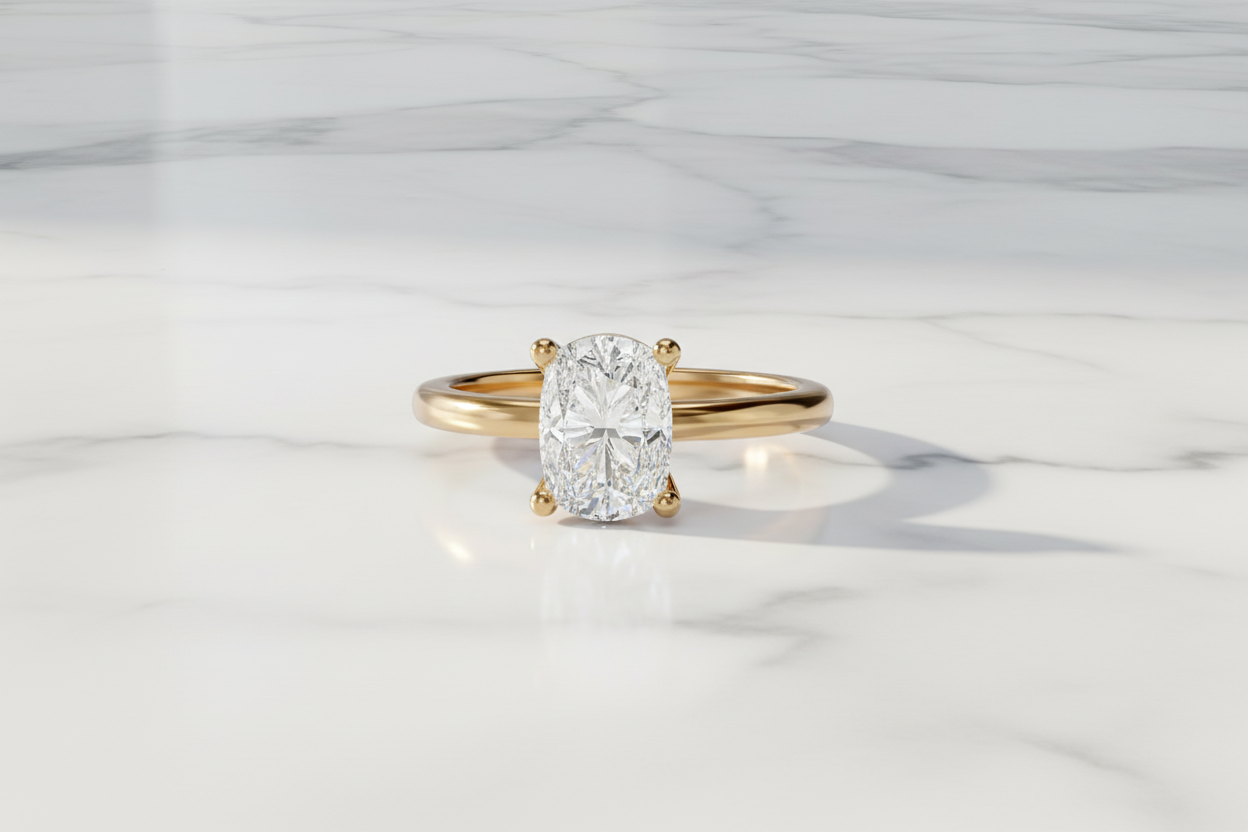
A solitaire places one centre diamond at the centre of the design. The band may be plain, tapered or lightly detailed, but the eye goes straight to the stone. It is a useful starting point for someone who likes clean lines, wants the outline of a particular diamond shape to remain clear, or plans to pair the ring with different wedding-band options.
Solitaire does not have to mean plain. Claw shape, basket profile, metal choice and band proportions can make a simple-looking ring feel personal. Browse Avita's lab diamond solitaire engagement rings to compare centre-stone-led designs.
Halo Engagement Rings

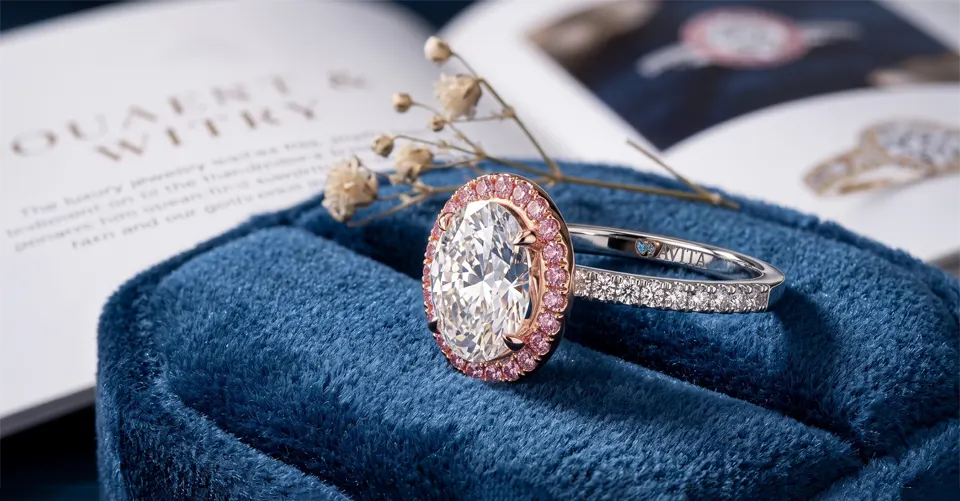
A halo surrounds the centre stone with smaller diamonds. That frame creates more visible diamond area from above and can make the centre appear larger. It often suits someone who enjoys detail and wants a brighter, more decorative outline.
Traditional halos are visible from the top. A hidden halo sits beneath the centre stone and adds side detail while keeping the top view closer to a solitaire. A halo has more small stones and setting points, so regular cleaning and occasional setting checks are sensible. Explore lab diamond halo engagement rings or read the fuller halo engagement-ring guide.
Trilogy Or Three-Stone Engagement Rings

A trilogy ring has a centre diamond with one stone on each side. The side stones can match the centre shape or provide contrast. This style gives the ring width and presence without using a full halo.
It can suit someone who likes symmetry, wants more than a single-stone look, or prefers the side view to feel as considered as the top view. Smaller side stones keep attention on the centre; larger ones create a more balanced three-stone composition. See Avita's trilogy engagement rings.
Diamond Shoulder Engagement Rings

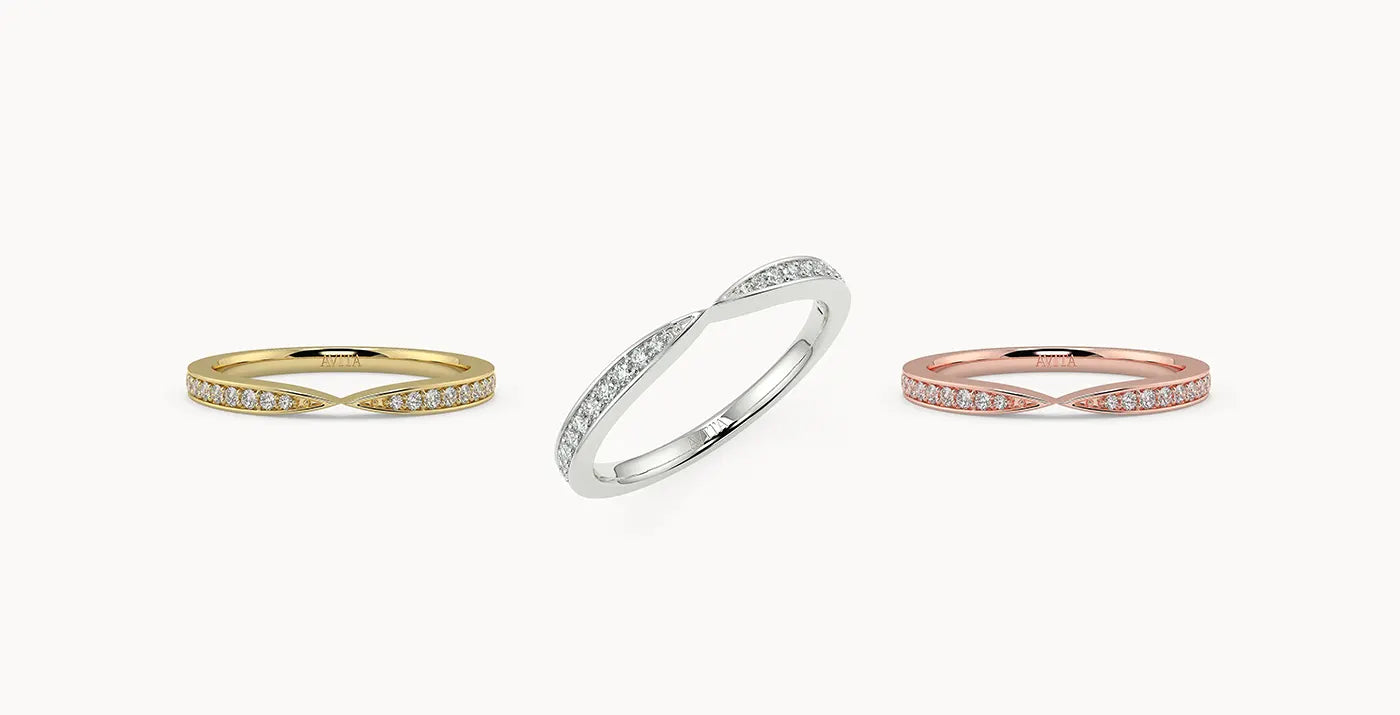
Diamond shoulder rings have smaller diamonds set along part of the band beside the centre stone. They add light and detail while retaining one clear focal point, so they can sit between a plain solitaire and a halo in overall presence.
The shoulder can be delicate or more pronounced. Consider how the setting meets the wedding ring and whether the wearer prefers fine detail visible from the side. Avita's diamond shoulder engagement rings show the category in more detail.
Hidden Halo And Other Detail-Led Settings
Some designs do not fit neatly into one label. A hidden halo, distinctive basket, split shank or sculpted band may change the character of a ring without changing its main category. Think of these as refinements after choosing the broad direction: centre-stone-led, framed, three-stone or diamond-detailed.
This is helpful when two people like different things. A clean oval solitaire can gain personality through the side profile, while a halo can be kept delicate enough that it does not overpower the centre diamond.
Choose The Diamond Shape Separately
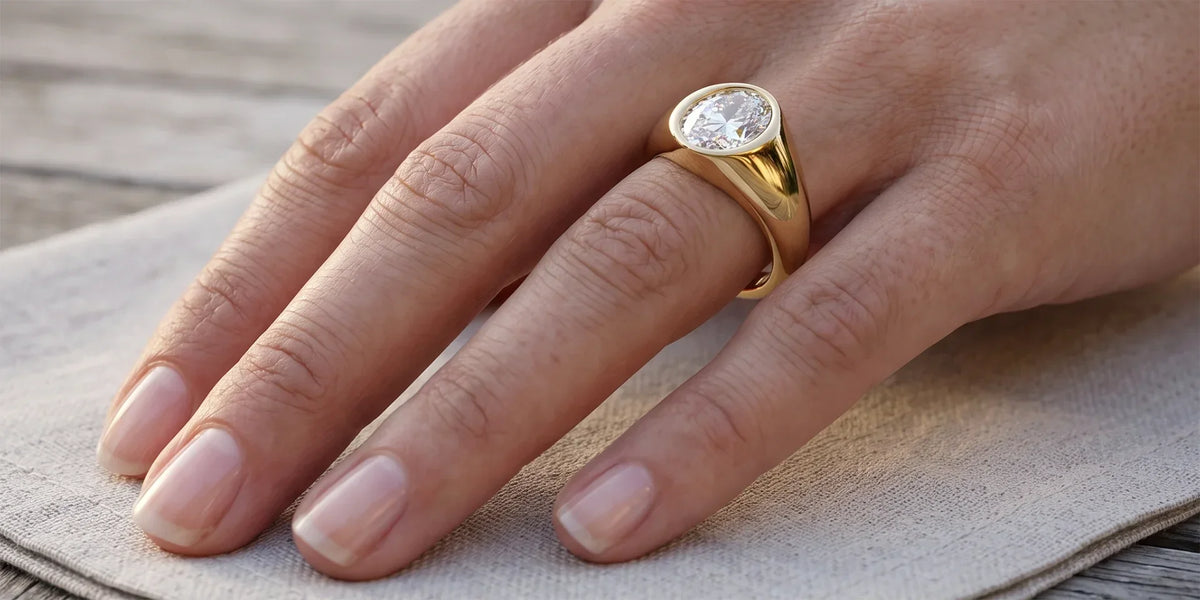
The setting determines the architecture of the ring; the diamond shape determines the centre stone's outline. Round diamonds usually feel balanced and versatile. Ovals can create an elongated look on the finger. Emerald cuts have a more geometric, open appearance, so their proportions and clarity are easier to notice.
There is no fixed pairing. An oval works in a solitaire, halo or trilogy; an emerald cut can look striking with tapered side stones or a restrained shoulder. Browse oval engagement rings and emerald-cut engagement rings as shape examples, then compare them in the setting you prefer.
Lab Grown, Natural Or Bespoke?
Setting choice, diamond route and budget work together. Lab grown diamonds are real diamonds created in a controlled laboratory environment and may allow a larger stone or higher specification within the same budget than a comparable natural diamond. Natural diamonds may be the preferred route for personal or family reasons.
Bespoke is useful when an existing style is close but not quite right, or when proportions, metal, setting height or wedding-ring fit need more control. A bespoke engagement ring consultation can turn a preferred direction into a specific design without forcing it into a stock category.
Think About Metal And Daily Wear
Metal changes the overall character of every style. Yellow gold can give a solitaire or trilogy a warmer contrast around a white diamond, while platinum and white gold keep the setting visually quieter. The most useful choice is usually the one that matches the jewellery the wearer already reaches for, rather than a rule about which metal suits a particular setting.
Daily life matters too. Consider the ring's height, the security of its claws and how often the wearer works with their hands. A detailed ring is not automatically impractical, and a solitaire is not automatically low profile. Ask to see the setting from the side and handle it as you normally would. This makes the practical differences between two otherwise similar designs much clearer.
If You Are Buying As A Surprise
Start with the jewellery your partner already wears: do they prefer a single focal point, fine detail, warm yellow gold or more geometric shapes? Saved images and comments about friends' rings can be more revealing than broad trend lists. If the evidence is mixed, choose a classic broad direction and keep the final profile adaptable through an appointment or bespoke discussion.
Which Type Should You Try First?
Try a solitaire first if the wearer prefers minimal jewellery or the centre diamond is the main priority. Try a halo first if visible detail and apparent size matter more. Try a trilogy if symmetry and width appeal. Try a diamond shoulder ring if the aim is a centre-led design with more sparkle along the band.
Then look at the side profile with a wedding band beside it. A low setting may create a gap with a straight band; a raised basket can leave more space. The answer is design-specific, which is why a short comparison appointment can save a great deal of second-guessing.
Engagement Ring Styles Compared
| Style | Main visual effect | Useful for | Consider before choosing |
|---|---|---|---|
| Solitaire | One clear centre stone | Clean, shape-led designs | Setting height and band detail |
| Halo | Framed, larger-looking face-up design | Visible diamond detail | More small stones to clean and check |
| Trilogy | Width and balanced side detail | Symmetry and three-stone presence | Side-stone proportions |
| Diamond shoulder | Light along the band | A centre-led ring with added detail | Wedding-ring fit and shoulder width |
See The Differences In Person
Online categories are useful for narrowing the search, but they cannot show how a setting sits on the hand. Book a viewing appointment at Avita's London, Hatton Garden studio to compare styles, centre-stone shapes and wedding-ring fit. If you already know the broad direction but need a particular profile or proportion, bring that to a bespoke consultation.
FAQs
What are the main types of engagement rings?
The main setting styles are solitaire, halo, trilogy and diamond shoulder. Hidden halos and other design details can refine any of those broad directions.
Which type of engagement ring is best for a first-time buyer?
A solitaire is often the easiest starting point because it makes the centre stone and proportions easy to compare. It is not automatically the best choice; a halo, trilogy or diamond shoulder ring may better match the wearer's style.
What is the difference between an engagement-ring setting and a diamond shape?
The setting is the ring's structure, such as solitaire or halo. The diamond shape is the outline of the stone, such as round, oval or emerald cut. Most shapes can be used in several settings.
Can lab grown diamonds be used in any engagement-ring style?
Yes. Lab grown diamonds can be set in solitaire, halo, trilogy and diamond shoulder designs in the same way as natural diamonds, subject to the individual design and stone proportions.
Which engagement-ring styles work with a wedding ring?
Many do. Fit depends more on the setting height, basket and band profile than the category name. Compare the engagement ring with a wedding band before finalising the design if a flush fit is important.