How to Choose an Engagement Ring: A Beginner's Guide
Quick Summary
- Start with budget and priorities before comparing individual engagement rings.
- Choose the centre stone type, diamond shape, setting and metal in that order.
- Cut quality, proportions and setting design often matter more than carat weight alone.
- Think about how the engagement ring will sit with a future wedding ring before committing.
- If you are unsure, a guided appointment with a jeweller can help you avoid expensive mistakes.
The Short Answer
The easiest way to choose an engagement ring is to make the decisions in the right order: budget, diamond type, shape, setting, metal, wedding ring fit and expert guidance if you need it.
Trying to choose everything at once is where many people get overwhelmed. One ring might have the right diamond but the wrong setting. Another might look beautiful online but sit poorly with a future wedding ring. A third might be outside budget because the diamond size, metal and setting have not been considered together.
This guide is for anyone choosing a ring, whether you are buying for a partner, choosing together or beginning the process on your own. Start by browsing engagement rings to understand the main styles, then narrow the decision step by step. You do not need to know every technical detail before speaking to a jeweller, but you should understand the choices that affect the finished ring.
Step 1 - Set a Realistic Budget
Ignore old rules about spending a fixed number of months' salary. They are not useful. A good engagement ring budget should reflect what you are comfortable spending, what design you want and which parts of the ring matter most to you.
Budget affects more than diamond size. It also affects diamond quality, metal choice, setting complexity and whether you choose a natural or lab grown diamond. If you want a larger centre stone or a higher specification within a set budget, lab diamond engagement rings may give you more flexibility.
The practical question is not simply "how much should I spend?" It is:
What do I want this budget to prioritise?
For some buyers, that priority is a larger centre diamond. For others, it is a natural diamond, a platinum setting or a bespoke design. Once the priority is clear, the budget becomes easier to use well.
Step 2 - Choose a Lab Grown or Natural Diamond
One of the first decisions is whether to choose a lab grown or natural diamond. Both can be right for an engagement ring, but they suit different priorities.
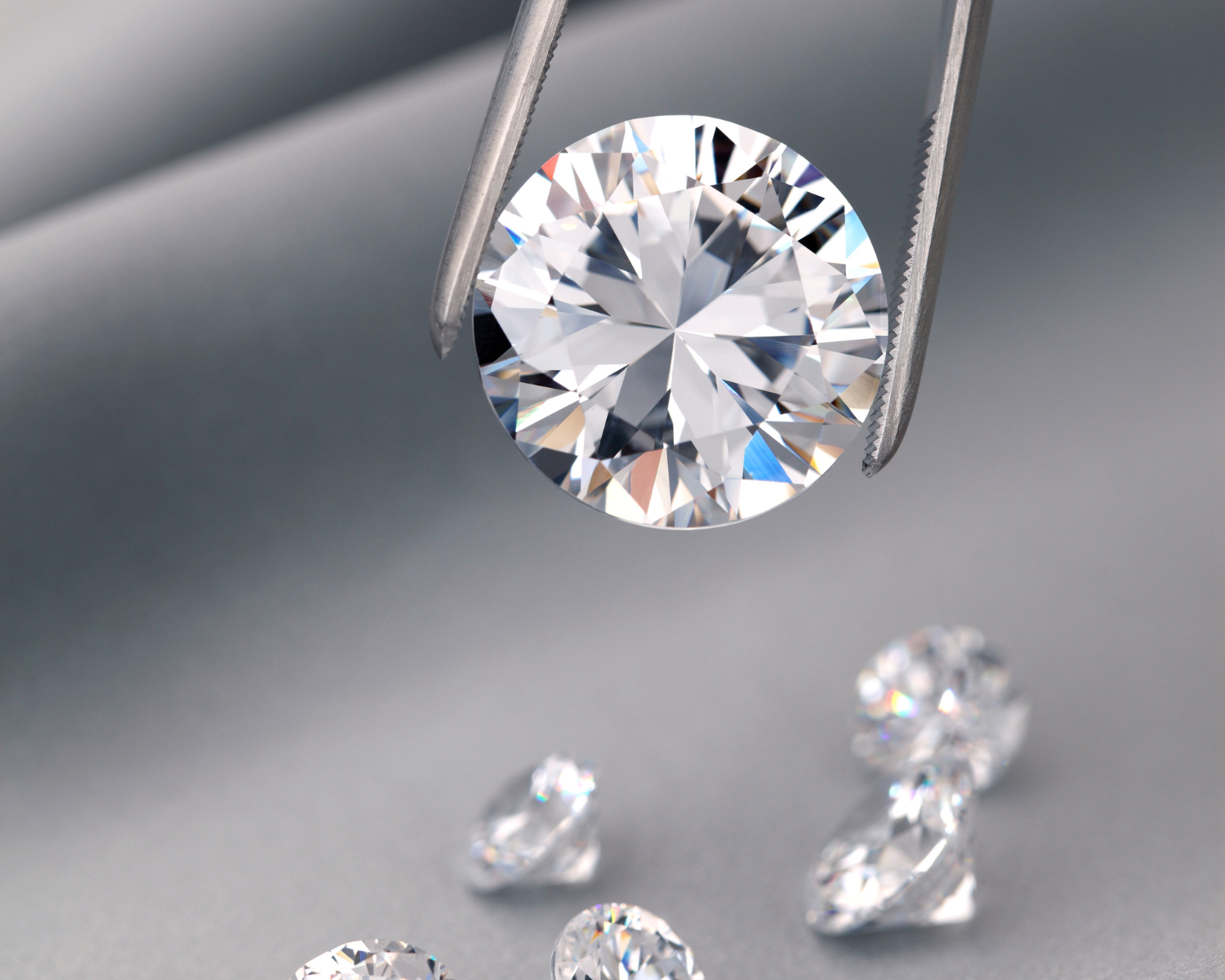
Lab grown diamonds are real diamonds created in a controlled laboratory environment. They often allow buyers to choose a larger or higher specification stone within the same budget. Natural diamonds are formed underground over geological time and are often chosen for rarity, origin and tradition.
Neither is automatically better. If value, size and specification matter most, lab grown may make sense. If natural origin and geological rarity matter more, a natural diamond may feel right. Our lab grown vs natural diamond guide explains the trade-offs in more detail.
If you are unsure, compare both before committing. Specifications can help, but seeing the stones and settings together often makes the choice clearer.
Step 3 - Choose the Diamond Shape
Diamond shape has a big effect on how the ring looks on the hand. It is also one of the choices people notice first, so it should reflect the wearer's style.
A round diamond is the classic choice and is known for strong brilliance. An oval engagement ring can look elegant and elongated, often giving the centre stone more visual spread across the finger. An emerald cut diamond engagement ring has a cleaner, more architectural look, with step-cut facets rather than intense sparkle.
Other shapes, such as cushion, pear, princess and radiant, can also work well depending on the design. Shape should not be chosen from a trend alone; it should suit the wearer, the setting and the proportions of the ring. Avita's diamond guide provides more detail on diamond shapes and the 4Cs.
If you are comparing shapes, look at them on the hand where possible. A shape that looks good in a product image may feel quite different once worn.
Step 4 - Choose the Setting Style
The setting controls how the diamond is presented. It can make the ring feel simple, detailed, bold or delicate.
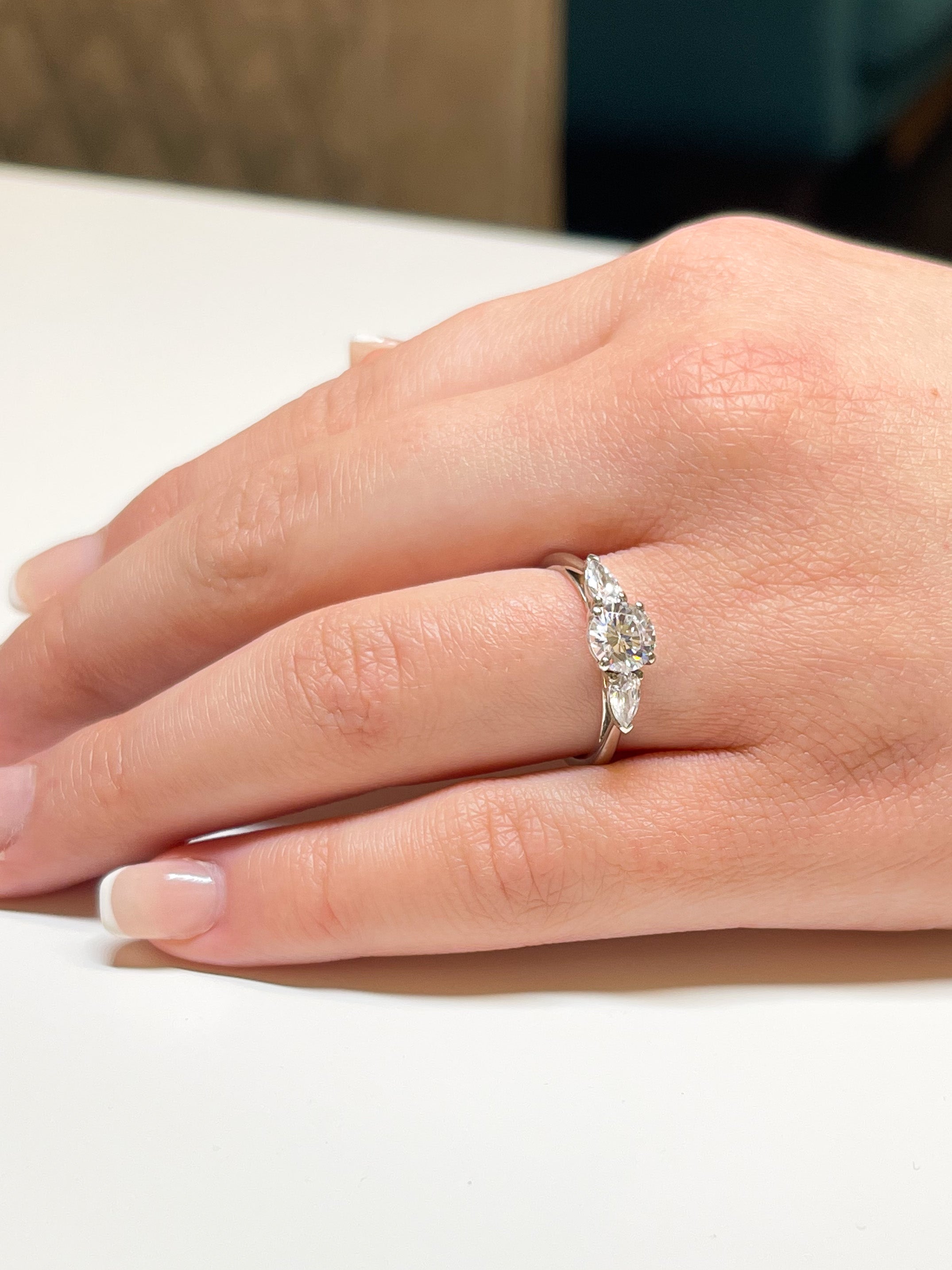
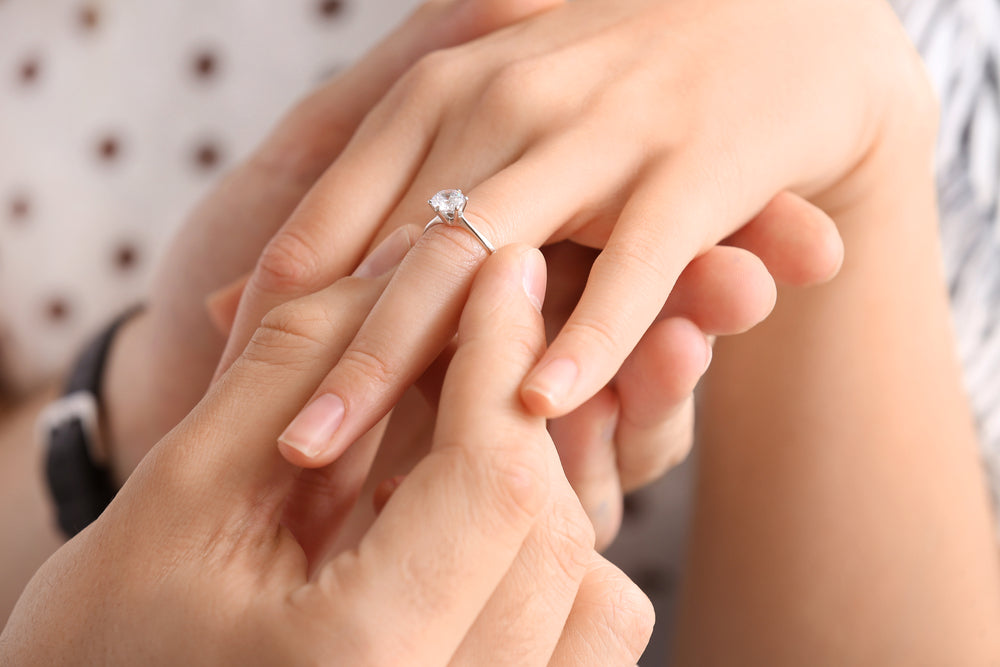
A solitaire setting keeps the focus on the centre stone. A halo setting surrounds the centre stone with smaller diamonds, adding more brightness and visual presence. Diamond shoulder settings add diamonds along the band, while trilogy rings use three stones and are often chosen for their past, present and future meaning.
If you want a clean centre-stone design, browse lab diamond solitaire engagement rings. If you want more visual presence around the centre diamond, lab diamond halo engagement rings may be worth comparing.
Do not choose a setting only because it looks impressive in isolation. Think about how it will sit on the hand, how practical it feels and how it will pair with a wedding ring.
Step 5 - Choose the Metal
Metal changes the character of the ring. It also affects maintenance, colour and how the diamond appears.
Platinum is naturally white and commonly chosen for fine diamond settings. White gold gives a bright white finish but may need rhodium re-plating over time. Yellow gold gives a warmer, classic feel. Rose gold has a softer tone and can make some designs feel more romantic or vintage-inspired.
The best metal is not only about appearance. It should suit the wearer's style, lifestyle and future wedding ring choice. If the wearer already chooses mostly yellow gold jewellery, a yellow gold engagement ring may feel more natural. If they prefer cooler tones, platinum or white gold may fit better.
Step 6 - Think About the Wedding Ring Too
This is the part many first-time buyers miss.
An engagement ring should not be chosen in isolation. It will often be worn with a wedding ring, so the shape of the setting, height of the centre stone, band width and profile all matter.
Some engagement rings allow a wedding ring to sit flush beside them. Others may need a shaped or bespoke wedding band. Neither is wrong, but it should be considered before the engagement ring is made or purchased.
This is especially important for detailed settings, low-profile rings, large centre stones and unusual shapes. A ring can look beautiful on its own and still create problems later if the wedding ring has not been considered.
If you are planning a custom design, Avita's bespoke engagement ring design service can take the future wedding ring into account from the beginning.
Step 7 - Decide Whether to Buy Online or Book an Appointment
Online browsing is useful for narrowing your taste. It helps you compare shapes, settings and metals before you speak to anyone. But for a high-value engagement ring, an appointment can save time and reduce uncertainty.
In person, you can compare diamond sizes, shapes and settings more realistically. You can also ask practical questions that are difficult to judge from a screen:
- Does this diamond size suit the hand?
- Will this setting work with a wedding ring?
- Is the band too thin or too wide?
- Should I prioritise cut, colour, clarity or carat?
- Would lab grown or natural make more sense for this budget?
A good appointment should help you narrow the decision rather than pressure you into choosing before you are ready.
A Simple Engagement Ring Checklist
Use this checklist before you buy or book an appointment:
- Budget range
- Lab grown or natural diamond preference
- Diamond shape shortlist
- Setting style shortlist
- Metal preference
- Ring size confidence
- Wedding ring compatibility
- Certification or guarantee questions
- Appointment or contact next step
You do not need every answer before speaking to a jeweller. The point is to know which questions still need answering.
Final Recommendation
Choosing an engagement ring is easier when you stop trying to find a single perfect option and start making the right decisions in the right order.
Begin with budget and priorities. Then choose the diamond type, shape, setting and metal. Before you commit, think about how the ring will be worn day to day and how it will sit with a future wedding ring.
If you already know the style, browse Avita's engagement ring collection. If you are unsure, book a guided appointment with Avita Jewellery in London. You can compare diamonds, settings and metals with a jeweller and make the decision with more confidence.
Not ready to book yet? Contact Avita and ask for help narrowing down your options.
FAQs
What should I choose first when buying an engagement ring?
Start with budget and priorities. Before choosing a specific ring, decide what matters most: diamond size, natural origin, lab grown value, setting style, metal or a bespoke design. This makes the rest of the process easier.
How much should I spend on an engagement ring?
There is no fixed amount you should spend on an engagement ring. Ignore outdated salary rules. Set a budget that feels comfortable, then decide how that budget should be used across diamond size, quality, metal and setting.
Is diamond shape or carat more important?
Both matter, but carat weight alone does not decide how impressive a ring looks. Shape, cut quality, proportions and setting style all affect the final appearance. A well-proportioned smaller diamond can look better than a poorly chosen larger one.
Should I choose a lab grown or natural diamond?
Choose lab grown if you want more size or specification within your budget. Choose natural if rarity, geological origin and tradition matter more to you. Neither is universally better; the right choice depends on your priorities.
What setting is best for an engagement ring?
The best setting depends on the wearer's style. Solitaire settings are clean and classic, halo settings add more presence, diamond shoulder settings add detail along the band, and trilogy settings offer a three-stone design with added meaning.
Should I book an appointment before buying an engagement ring?
If you are unsure about diamond size, shape, setting, metal or wedding ring compatibility, an appointment is a good idea. Seeing options in person and speaking to a jeweller can help you avoid mistakes and choose with more confidence.